
Are You an Optimist, Pessimist or Realist?

Imagine looking at a row of doors. What is the first thought that comes into your mind? Do you want to know what is behind each door, wonder which door is safe, or simply choose one and deal with whatever you find? Your first reaction may tell you something about how you approach life. An optimist may look forward to discovering what is behind the doors, a pessimist may first consider the risks, and a realist may open a door and respond to what is there. But there is another possibility: do you see the opportunities?
“I dwell in possibility.” — Emily Dickinson
“The possibilities are numerous once we decide to act and not react.” — George Bernard Shaw
“We all have possibilities we don’t know about. We can do things we don’t even dream we can do.” — Dale Carnegie
“We have more possibilities available in each moment than we realize.” — Thich Nhat Hanh
“The future belongs to those who see possibilities before they become obvious.” — John Sculley
Do You Live in a World of Possibility?
When something goes wrong, do you believe there is another possibility, or do you tend towards pessimism, optimism or realism? A pessimist often focuses on negative outcomes, an optimist expects a favourable result, and a realist considers the circumstances as they appear. Perhaps you are a mixture of all three, with one tendency stronger than the others. Understanding your natural approach is useful, but it does not have to determine how you respond in every situation. You can choose to look for possibilities.
The World Needs All Three
The world benefits from optimists, pessimists and realists because each brings a different perspective. An optimist expects the best, a pessimist prepares for the worst, and a realist responds to what is happening. Knowing your own tendency gives you useful information about yourself, but whatever your natural outlook, you can still choose to look for possibilities.
When Expectations Fail
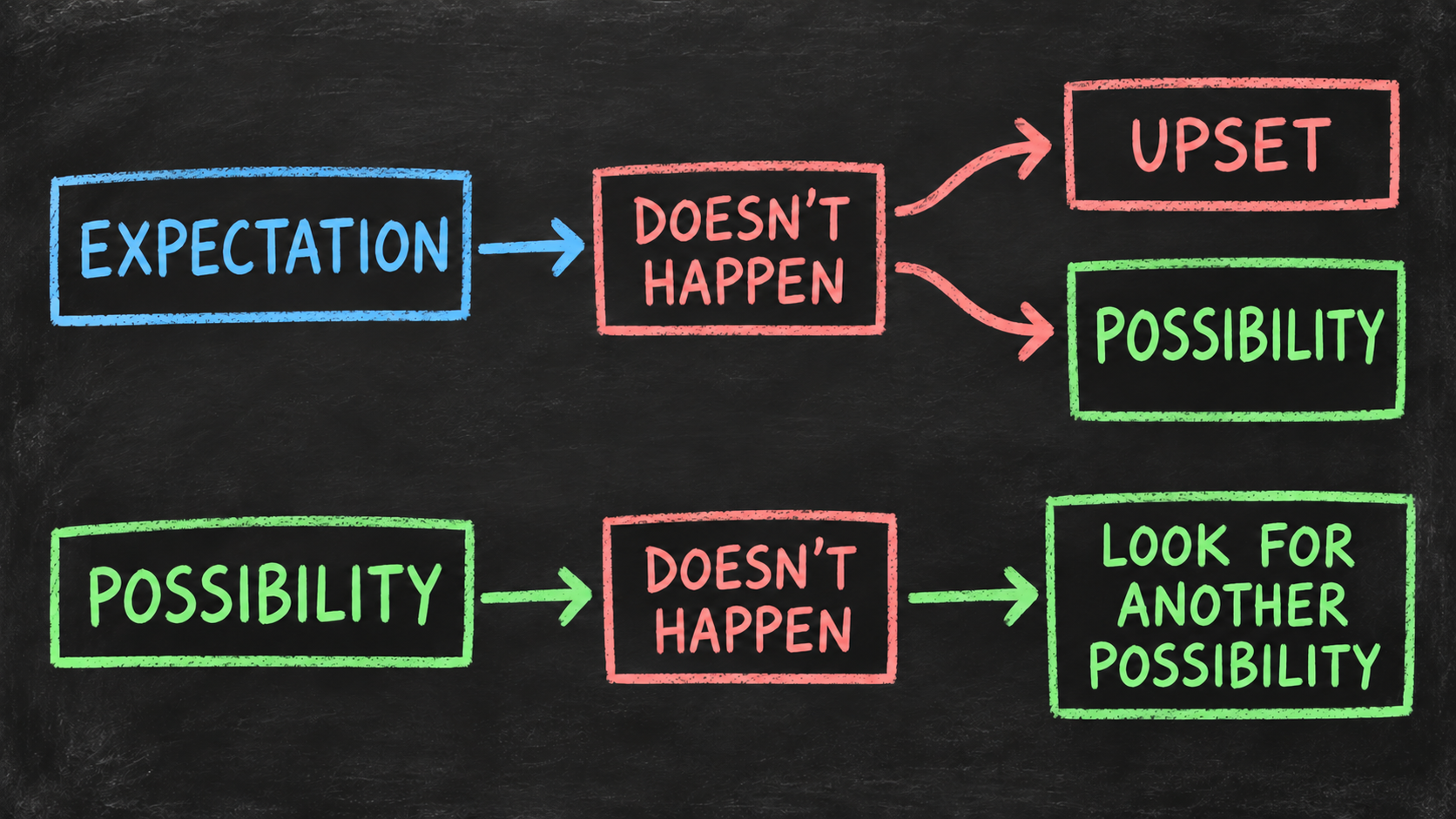
We all have expectations. Society, our parents, friends, schools and workplaces have expectations of us, and we create expectations for ourselves. But what happens when something does not turn out as expected? Often, people become upset or blame someone—or something—for the result.
Golf provides a familiar example. A golfer hits a poor shot and may blame the club, the golf bag or themselves. But what if the shot were treated as information instead? You can learn from what happened and try something different next time. The result has not necessarily ended the possibility; it has given you another piece of information to use.
Living in a World of Possibility
When you begin with possibility, an unexpected outcome does not have to mean failure. It can become another starting point. There may be another option, and that option may lead to something you had not previously considered. Looking for possibilities helps you keep the bigger picture in view rather than becoming stuck on one disappointing result.
There Are Always More Possibilities
Whatever type of person you tend to be, you can choose to look for a way forward. Think about your reactions when something does not work out. Do you become emotional or angry, blame someone, or give up? Or do you begin looking for another approach? If you feel upset, an expectation may have been disappointed. Once you start considering possibilities, you may identify options you could not see at first.
One possibility does not have to produce the result you wanted. It can simply lead you towards another possibility. The important thing is to keep looking rather than assuming that the first outcome is the only one available.
Possibility Changes the Question
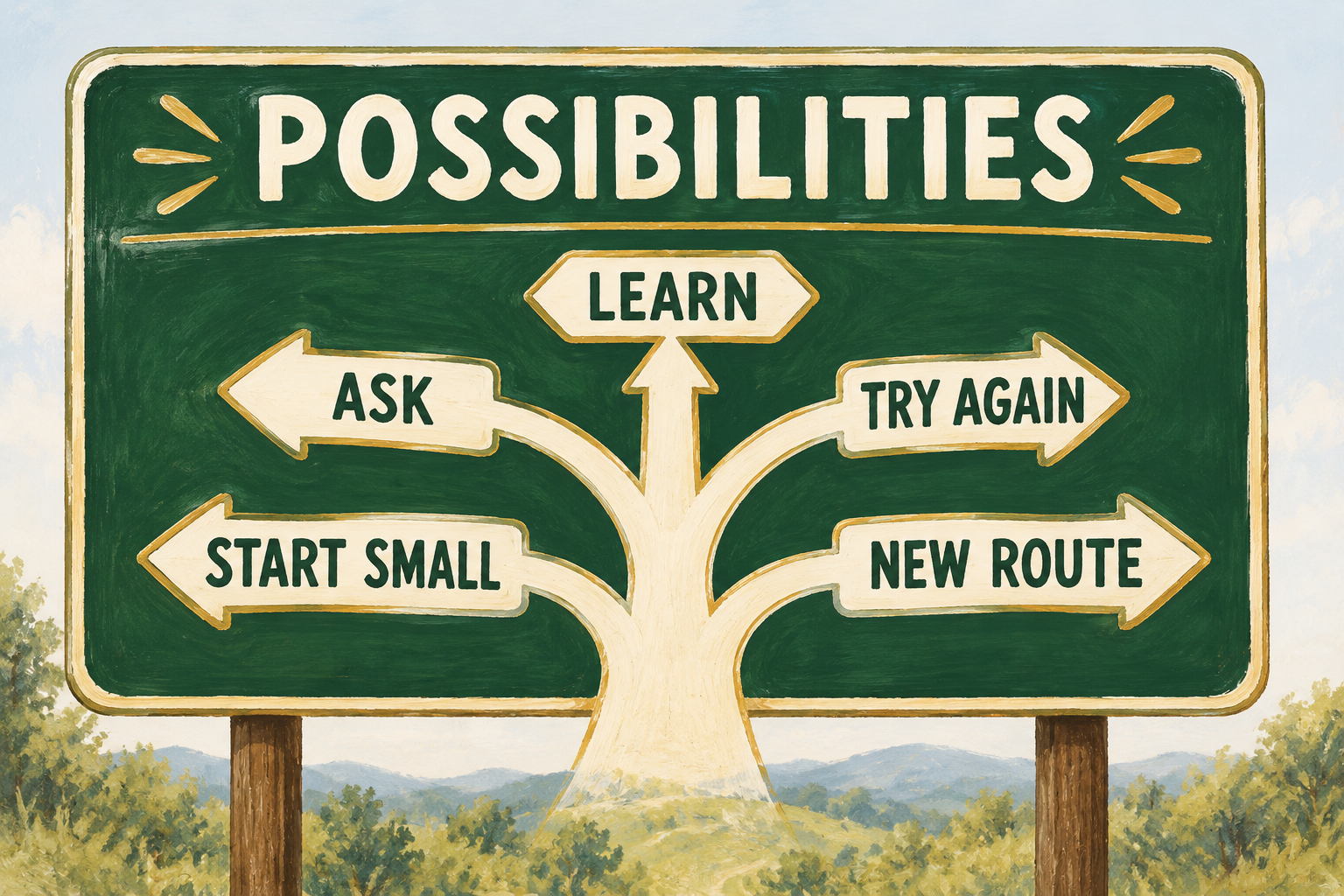
There is a significant difference between asking, “Why didn’t this work?” and asking, “What else is possible?” The first question can keep you focused on what went wrong. The second opens the door to what might happen next.
This does not mean ignoring reality. It means recognising that reality does not necessarily offer only one possible outcome. Sometimes an unwanted result gives you information that helps you discover an option you had not considered.
You Have a Choice
You may naturally be optimistic, pessimistic or realistic, or move between these approaches depending on the circumstances. Whatever your tendency, you can still consider other possibilities. When something does not work out, there may be another way. When one opportunity disappears, another may appear. Life continually presents possibilities, although sometimes we simply do not notice them.
Summary
Are you an optimist, a pessimist or a realist? Perhaps you are a mixture. Whatever you are, there is another question worth asking: do you live in a world of possibilities?
When you choose to look for possibilities, you can keep moving forward, create something new and find another way. If you feel stuck, talk to someone, look again, listen again and consider another possibility. Life continually presents opportunities. Sometimes all we have to do is notice them and choose to explore them.
Further Reading
- Psychology Today: How to find and cultivate opportunities
- Greater Good: Imagine your best possible life
- Stanford University: Growth mindset and the potential to learn and grow
Books Worth Exploring: Browse Lance’s recommended reading on communication, self-understanding, personal growth and leadership.